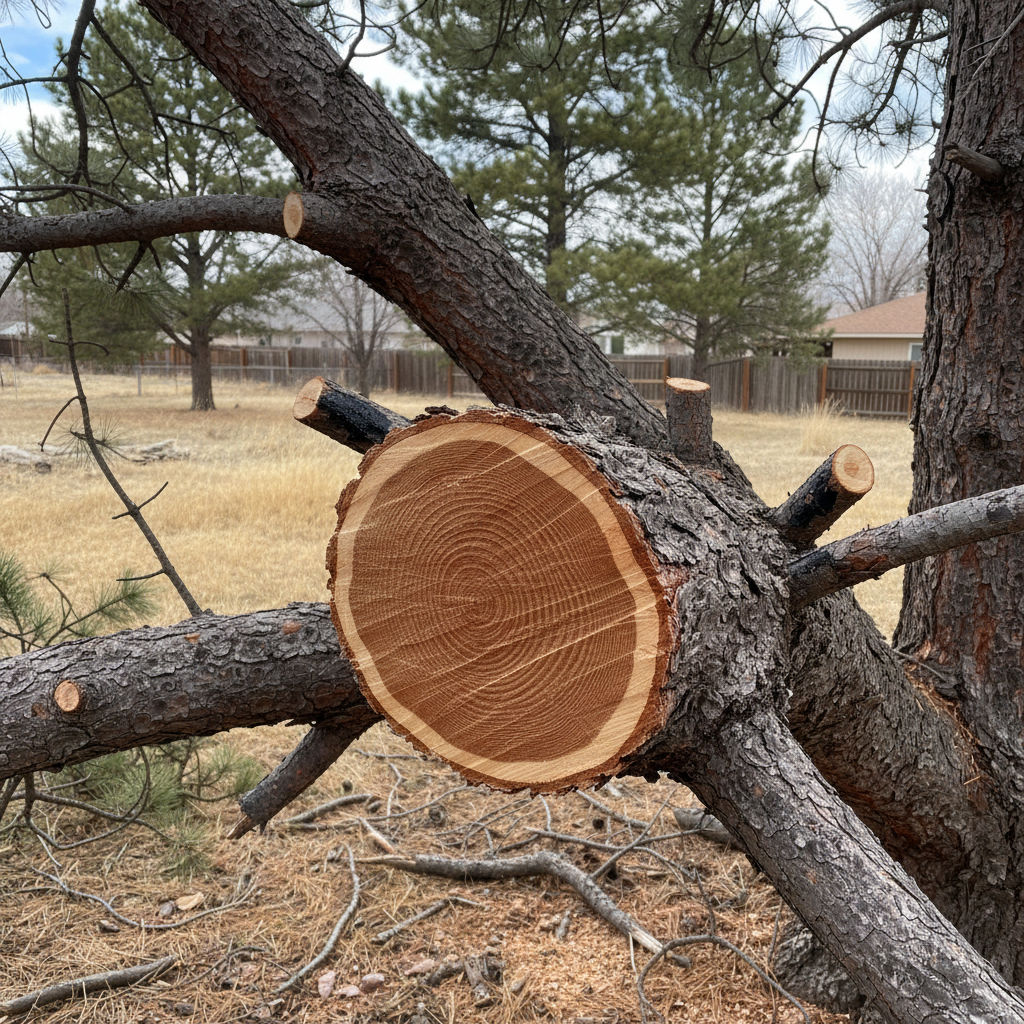
Alright, let's talk about trimming your trees. It looks simple enough, doesn't it? Just grab a saw, cut some branches. But honestly, there's way more to it than just hacking away, especially if you want healthy trees and, you know, want to avoid a trip to the emergency room. As a local guy who's seen plenty of trees – and unfortunately, plenty of DIY mistakes – I want to give you the real story on what you can actually tackle yourself and when you absolutely need to pick up the phone and call someone like us at Progressive Tree.
Before You Even Think About Cutting
First things first, why are you even trimming? Is it a dead branch? Is it rubbing on your house? Or are you just trying to shape it up a bit? Knowing your goal helps you figure out the right way to approach it. Don't just trim for the sake of it, you know? Every cut is like a wound, and trees need time to heal.
Next, take a good look at the tree itself. What kind is it? A young sapling is completely different from a big, old oak. How thick are the branches you're thinking of cutting? If they're thicker than your wrist, you're probably getting into professional territory. Also, please, *please* check for power lines. This is a huge one. If any branch is within 10 feet of a power line, stop right there. That's not a DIY job; that's a job for the utility company or a licensed, insured pro with specialized equipment.
Think about the season too. For most deciduous trees around Sturgis, late winter or early spring, before the leaves really start budding, is often perfect. You can see the tree's structure much better then, and it's dormant, so it'll recover faster. Evergreens are a bit different; they usually do best with light pruning in late spring or early summer. Try to avoid heavy pruning in late summer or fall. That can actually stimulate new growth that won't have time to harden off before our Black Hills winters hit, leaving it vulnerable to frost damage.
What You Can Likely Do Yourself
For the average homeowner, you can handle what we call 'maintenance pruning' or 'cosmetic pruning' on smaller trees and shrubs. This includes:
- Getting rid of small dead or diseased branches: If a branch is clearly dead (no leaves, brittle, discolored) or shows signs of disease, go ahead and remove it. Just make sure you cut back to healthy wood.
- Pruning suckers and water sprouts: Suckers grow from the base of the tree or roots, and water sprouts shoot straight up from branches. They're usually pretty weak and just drain energy from the main tree. Snip 'em off.
- Light shaping on young trees: If you're trying to encourage a good structure on a young tree, you can make small cuts to remove crossing branches or those growing inward. Think of it as guiding the tree, not forcing it.
- Branches you can reach safely from the ground: If you need a ladder, please think twice. If you need to be higher than a step stool, definitely think twice.
Always use sharp, clean tools. Hand pruners for small stuff, loppers for branches up to about 1.5 inches thick. Make clean cuts, don't leave stubs, and don't cut flush with the trunk. There's a 'branch collar' where the branch meets the trunk; cut just outside that. That collar helps the tree heal, you see.
When It's Time to Call a Pro
This is where I see people get into real trouble. Don't try to be a hero. Here's when you absolutely need to call in the cavalry:
- Any branch over 2 inches in diameter: This is a pretty solid rule of thumb. Larger branches are heavy, can fall unpredictably, and need proper cutting techniques to prevent tearing the bark.
- Branches near power lines or your house: Like I said before, power lines are a definite no-go. And if a branch is hanging over your roof or too close to your siding, a professional has the equipment and know-how to remove it without damaging your home.
- If you need a ladder: Seriously, ladders and chainsaws just don't mix. Falls from ladders are incredibly common and often lead to serious injuries. We have bucket trucks, climbing gear, and safety protocols for a reason.
- Storm damage: After a big windstorm, like the ones we get coming off the hills, you might have broken or hanging branches. These are under tension and extremely dangerous. Do not try to clear them yourself.
- Large, mature trees: If you've got a big, established tree, especially one that's been around longer than you have, it needs professional care. Pruning these giants requires a deep understanding of tree biology and structural integrity.
- Tree removal: This should be obvious, but I've seen people try. Don't. Just don't.
We've got the training, the insurance, and the right gear to do these jobs safely and correctly. It's an investment in your property's safety and the long-term health of your trees, really.
Look, I get it. You want to save a buck. But some jobs just aren't worth the risk. A few hundred dollars for a professional trim is a lot cheaper than a trip to the ER or, worse, a new roof. If you're in Sturgis or the surrounding area and you're unsure, just give us a call at Progressive Tree. We'll come out, take a look, and give you an honest assessment. Sometimes it's a simple fix you can do yourself, and sometimes it's a job for us. Either way, you'll know your trees are in good hands.